
Music theory for composition is a different question from music theory in general. You don’t need every rule; you need the handful that turn an idea into a finished piece: which scale sets the mood, which chords pull toward home and which pull away, how a melody sits on top, and how sections add up to a song. This guide covers those, from the basics through modulation, counterpoint, form and modes, with pointers to tools worth using.
If you’re new to theory altogether, start with our music theory for beginners guide and come back here when you want to write
The Importance of Music Theory for Composition
Music theory is the foundation upon which composition is built. Whether you’re a beginner or an experienced musician, understanding music theory is essential for creating dynamic and captivating compositions.
Understanding the Basics of Music Theory
Music theory is essentially the study of how music works. It provides composers with a set of rules and principles that guide their creative decisions. By understanding the basics of music theory, you gain a deeper appreciation for the structure and organization of music.
One fundamental aspect of music theory is notation. By learning how to read and write musical notation, composers are able to communicate their ideas effectively and accurately. Additionally, understanding concepts such as rhythm, tempo, and dynamics allows composers to create a sense of movement and emotion within their compositions.
Exploring Musical Scales and Chords
Scales and chords form the building blocks of music. They provide composers with a tonal framework to work with and help create a sense of harmony in the composition.
By exploring different musical scales, such as major and minor scales, composers can evoke different moods and emotions in their music.
Chords, on the other hand, are made up of multiple notes played simultaneously. They provide a sense of harmony and can be used to create tension and resolution within a composition.
Understanding how to construct and use chords effectively allows composers to convey their intended emotions and create a compelling musical journey for the listener. Tools such as Scaler 2 from Plugin Boutique will aid this learning process.
Mastering Melody and Harmony
Melody and harmony are two essential elements of composition that work hand in hand. Melody refers to the main line or theme of a composition, while harmony refers to the combination of different tones and chords that support and enhance the melody.
Mastering melody involves crafting memorable and expressive motifs or themes that capture the listener’s attention. It requires an understanding of how different notes and intervals work together to create a cohesive and engaging melodic line.
Harmony, on the other hand, involves the interplay of chords and supporting tones that accompany the melody. It adds depth and richness to the composition, enhancing the emotional impact of the music.
A strong grasp of music theory allows composers to create harmonies that complement and enhance the melody, creating a powerful and cohesive musical experience.
Learn Music Theory by Ear
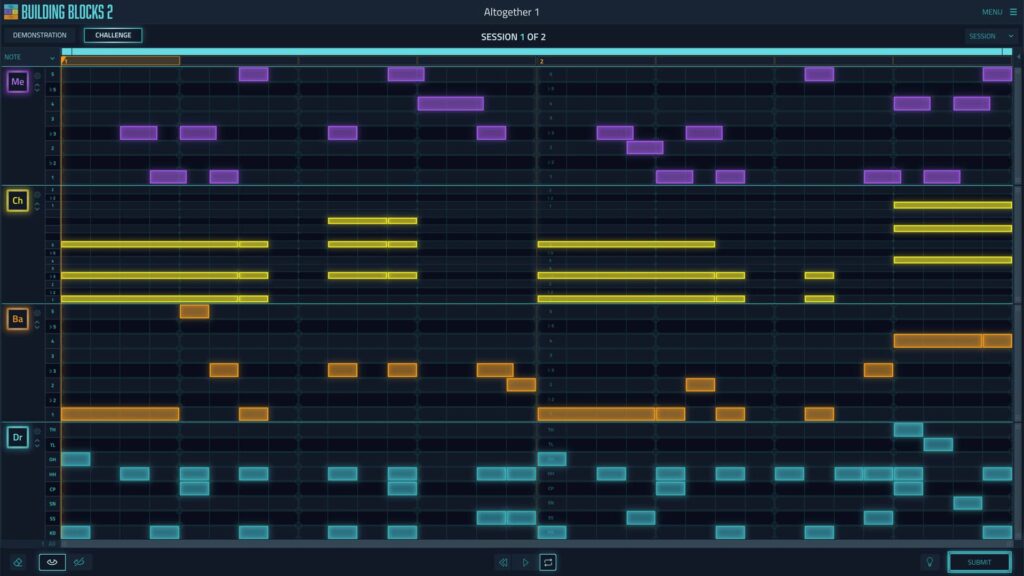
Building Blocks trains your ear to hear chords, melodies and basslines, so whatever you make in your DAW sounds like you meant it. Video-game style.
Applying Music Theory in Composition
Music theory is a fundamental aspect of composing music. By understanding and applying various music theory concepts, composers can create compositions that are harmonically rich, emotionally impactful, and structurally coherent.
Using Chord Progressions to Create Emotional Impact
Chord progressions play a crucial role in evoking emotions in music compositions. Different chord progressions can elicit various emotional responses from listeners.
For instance, a simple major chord progression, such as I-IV-V, often conveys a sense of happiness or joy. On the other hand, minor chord progressions, such as i-iv-VII, tend to evoke feelings of sadness or melancholy.
To create emotional impact through chord progressions, composers can experiment with different chord qualities, inversions, and rhythmic patterns.
They can also explore the use of borrowed chords, secondary dominants, or chromatic alterations to add complexity and tension to their compositions.
By strategically selecting and arranging chords, composers can effectively communicate the desired emotional message to their audience.
Utilizing Key Signatures and Modulations in Compositions
Key signatures and modulations offer composers a wide range of tonal possibilities and techniques to enhance their compositions.
Key signatures provide a framework for organizing musical material by establishing a tonal center or a “home” key. Composers can use key signatures to create a sense of stability and structure within their compositions.
Modulations, on the other hand, involve transitioning from one key to another within a composition. Modulating to a different key can bring about a change in mood, energy, or tension.
Modulations can be achieved through various techniques, such as pivot chords, common-tone modulation, or chromatic mediants. By skillfully incorporating modulations, composers can add interest and variety to their compositions while maintaining a coherent musical narrative.
Incorporating Counterpoint Techniques for Depth and Texture
Counterpoint refers to the art of combining multiple melodic lines in a composition. By incorporating counterpoint techniques, composers can create harmonically rich and texturally diverse compositions.
Counterpoint allows for the independent movement of individual melodic lines, resulting in intricate and compelling musical interactions.
Composers can experiment with different contrapuntal devices, such as imitation, inversion, augmentation, or diminution, to create engaging and intricate musical textures.
They can also explore different types of counterpoint, such as species counterpoint or free counterpoint, to achieve specific compositional goals.
Advanced Concepts in Music Theory for Composition
Music theory forms the foundation of composition, allowing composers to effectively convey their ideas and emotions. While a solid understanding of the basics is essential, diving into advanced concepts can truly elevate your composition skills.
Understanding Form and Structure in Music
Form and structure provide the framework through which musical ideas are organized and developed. By understanding the various forms commonly used in music, composers can create cohesive and engaging compositions. We cover this in more detail in the music theory for beginners post, and our guide to song structure shows how verses, choruses and bridges fit together in popular music.
One common form is the sonata form, which consists of three main sections: exposition, development, and recapitulation. The exposition introduces the main themes, the development section explores and develops these themes, and the recapitulation restates them in a slightly modified manner.
This structure allows for tension, contrast, and resolution, creating a sense of narrative in the composition.
Another important form is the rondo form, characterized by its recurring main theme. It follows an ABACA pattern, where the A section is the main theme and the B and C sections provide contrast and variation. This form offers composers a great opportunity for melodic development and experimentation.
Lastly, the theme and variations form involves taking a simple theme and creating variations by altering its melody, harmony, rhythm, or other musical elements. This form allows composers to showcase their creativity and versatility by constantly transforming the original material.
Exploring Advanced Harmonic Progressions
Harmony plays a crucial role in music composition, providing depth and emotional impact. Once you have a solid grasp of basic harmonic progressions, exploring advanced concepts can greatly enhance your compositions.
One technique to consider is modulation, which involves smoothly transitioning from one key to another within a composition. Modulating can create contrast, evoke different emotions, and add interest to the music.
Experimenting with different modulation techniques, such as pivot chords or common-tone modulation, can bring exciting and unexpected twists to your compositions.
Additionally, chromatic harmony can add richness and complexity to your compositions. By incorporating chromaticism, which involves using notes outside the key or tonality, you can create tension and unique harmonic progressions.
This technique is especially effective when used selectively, adding color to specific moments in your composition.
Utilizing Modes and Non-Traditional Scales
Modes and non-traditional scales provide composers with alternative tonalities and unique flavors. By incorporating these scales, you can add distinct moods and textures to your compositions.
One commonly used mode is the Dorian mode, which has a minor tonality with a raised sixth scale degree. This mode is often associated with a bittersweet or melancholic sound. Experimenting with the Dorian mode can bring a fresh perspective to your compositions and open up new creative possibilities.
Another interesting scale to explore is the whole-tone scale, which consists entirely of whole steps. This scale creates a dreamy and ethereal sound, often associated with impressionist music. Utilizing the whole-tone scale can add a sense of mystique and otherworldliness to your compositions.
Incorporating modes and non-traditional scales allows composers to break away from traditional tonalities and expand their compositional palette, resulting in unique and captivating musical experiences.
Tools and Resources for Learning Music Theory
Learning music theory is an essential aspect of becoming a skilled composer, and the right tools make it faster.
Music Theory Software and Apps for Composition
Music theory software and apps offer an interactive and convenient way to learn and practice music theory concepts.
Whether you’re a beginner or an advanced composer, these digital tools can provide valuable guidance and enhance your composition skills. Here are a few highly recommended options:
- Building Blocks: our own course, which teaches theory by ear inside a DAW-style piano roll, so you learn chords, scales and progressions by writing them rather than memorizing them. Building Blocks.
- Sibelius: Sibelius is a popular music notation software that allows composers to write, edit, and play back musical scores. It offers a comprehensive range of features, including advanced notation, composition tools, and MIDI integration.
- MuseScore Studio: free, open-source notation software that covers writing, editing and playback, and the natural first choice now that Finale has been discontinued.
- Notion: Notion is a versatile music composition software that combines notation, sequencing, and audio integration. It offers an intuitive interface and real-time collaboration features, making it ideal for both individual composers and collaborative projects.
- Yousician: Yousician is a popular music learning app that offers interactive lessons for various instruments, including piano, guitar, bass, ukulele, and singing. It provides step-by-step tutorials, personalized feedback, and a vast library of songs to practice with.
Joining Music Theory Communities and Forums for Support
Engaging with like-minded individuals and seeking support from fellow composers can greatly enhance your music theory learning experience.
Joining music theory communities and forums not only provides you with a platform to share your progress and seek guidance but also exposes you to different perspectives and insights. Here are some excellent communities and forums to consider:
- r/musictheory: Reddit’s music theory community is a vibrant hub where musicians, composers, and music enthusiasts gather to discuss various topics related to music theory. It offers a platform for asking questions, sharing compositions, and engaging in insightful discussions.
- The Composer’s Forum: The Composer’s Forum is an online community dedicated to composers of all experience levels. It provides a space for composers to connect, share their work, ask for feedback, and engage in constructive conversations about music theory and composition techniques.
- Music Theory Online: Music Theory Online, hosted by the Society for Music Theory, is a valuable resource that offers a range of articles, forums, and discussions on diverse music theory topics. It provides a platform for scholarly exchanges and practical insights into music theory.
- Discord Music Theory Servers: Discord is a popular platform for communities to gather and communicate. Several music theory servers, like “Music Theory and Composition,” “Art of Composing,” and “Music Matters,” offer spaces to connect with fellow composers, ask questions, and share knowledge.
Conclusion
Theory for composition is a toolkit, not a rulebook. Pick one idea from this guide (a modulation, a Dorian melody, a borrowed chord) and write eight bars with it today. That’s how it sticks.
Learn Music Theory by Ear
Building Blocks trains your ear to hear chords, melodies and basslines, so whatever you make in your DAW sounds like you meant it. Video-game style.

Martin “Marty” Glover is the founder of Part Time Producer, where he helps aspiring producers make professional music on a part-time schedule and budget through in-depth Bitwig Studio tutorials and curated deals on music software.