
Un bombo y un bajo que funcionan juntos le dan a una canción unos graves llenos y potentes sin volverse lodosos. El EQ es parte clave para lograrlo, junto con el bombo mismo, la afinación y el balance, y gran parte del trabajo de EQ es resta.
Este es el orden en el que suelo trabajar. Si quieres los rangos en un solo lugar mientras trabajas, la hoja de referencia de EQ para batería los tiene.
Cómo ecualizar un bombo en seis pasos
1. Escúchalo primero en la mezcla
Antes de tocar una banda, reproduce el bombo contra el bajo y el resto de la batería y descubre qué es lo que realmente está mal. Un bombo que suena delgado en solitario puede ser exactamente lo correcto en la pista, y un bombo que suena enorme solo suele ser el que se come tu bajo.
Los bombos acústicos y programados también requieren cosas distintas, así que lo que sigue son puntos de partida más que una receta.
2. Filtra los extremos
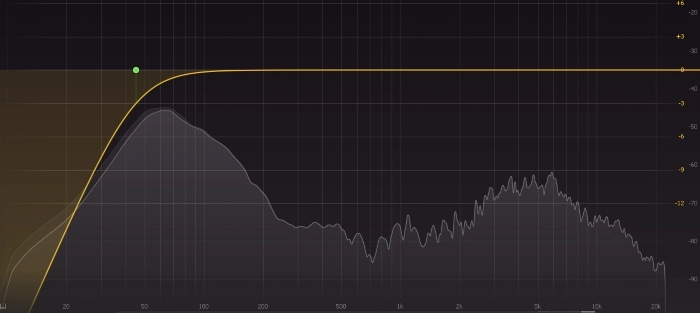
El retumbo por debajo del bombo a menudo no hace más que comer headroom, así que un pase-alto es un primer paso común. Alrededor de 40 Hz es un lugar razonable para empezar en un bombo acústico, aunque si la energía sub ahí abajo es parte del sonido, déjala. Verifica antes de comprometerte: un 808 o un bombo electrónico profundo puede tener su fundamental por debajo de eso, y filtrarlo te deja con un click y sin peso.
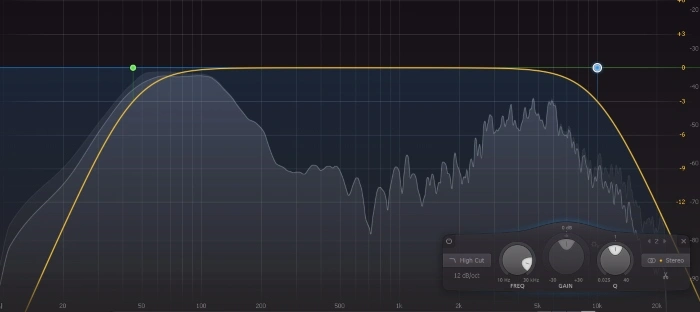
Un pase-bajo es más opcional. A menudo hay poco por encima de 10 kHz en un bombo que valga la pena conservar, y recortarlo ordena la parte alta de la mezcla, pero escucha primero, porque ahí también es donde viven el sangrado de platillos y el ambiente, y a veces el sangrado es lo que hace que la batería suene como batería.
Una pendiente más suave, 12 dB por octava en lugar de algo más pronunciado, es normalmente lo que quieres aquí. Qué tan audible es cualquier filtro depende de dónde lo coloques y cómo se comporta la fuente, así que escucha en lugar de asumir.
3. Corta la resonancia de caja
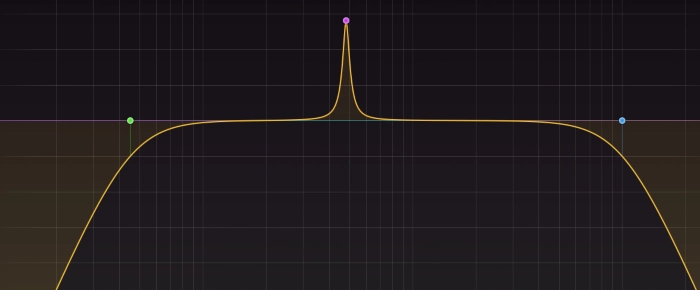
Con los extremos resueltos, lo siguiente a escuchar es una resonancia de caja en los medios. Haz una banda estrecha, auméntala, bárrela y escucha el punto que suena a cartón. Entre 200 Hz y 2 kHz es el área de búsqueda usual, pero ahí es donde miras, no donde el problema siempre está.
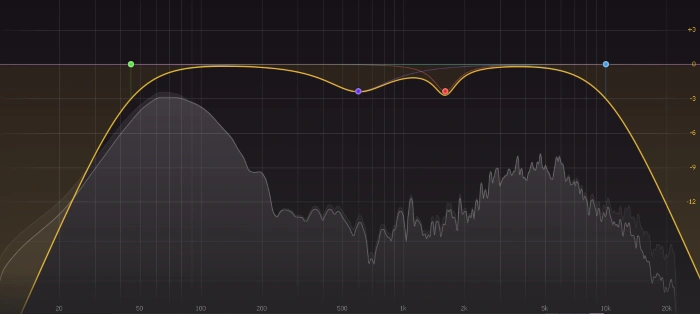
Convierte el realce en un recorte cuando encuentres uno, y quita el barrido de realce antes de decidir cuánto quitar. Un par de decibelios suele ser suficiente. No hay un número objetivo de recortes: si el bombo no tiene un problema, no vayas a buscar uno para resolverlo.
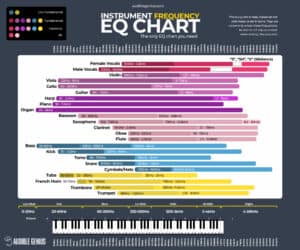
Descarga Gratuita: Póster con Tabla de Frecuencias EQ
El rango de frecuencias de cada instrumento en una tabla codificada por colores. Imprímela, pégala sobre tus monitores y deja de adivinar dónde cortar.
4. Hazle Espacio al Bajo
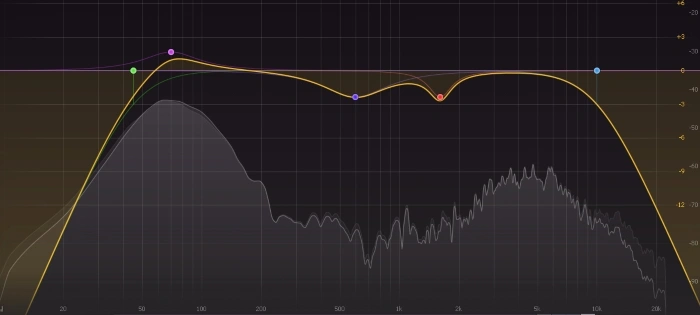
El bombo y el bajo se superponen mucho, comúnmente entre 80 y 200 Hz, aunque en un arreglo cargado de graves lucharán más abajo. El solo te ayuda a escuchar lo que hace cada uno, pero esta decisión solo tiene sentido con ambos sonando.
La mayoría de los EQ modernos te mostrarán el espectro de otra pista superpuesto sobre la que estás editando. Pon el bajo en el analizador del bombo y podrás ver dónde se superponen, lo cual es un buen punto de partida para escuchar. La superposición en la pantalla no es lo mismo que el enmascaramiento audible, así que confírmalo con tus oídos.
Luego decide quién se queda con qué. Normalmente dejo que el bombo tenga los graves y subo el bajo justo por encima, pero lo opuesto también funciona, y en muchos discos el bajo domina la octava más grave mientras el bombo vive en su ataque. También pueden compartirlo, cuando ambos tienen envolventes distintas y el timing es preciso. Lo que hay que evitar es llegar a esa superposición por accidente.
5. Añade el Click
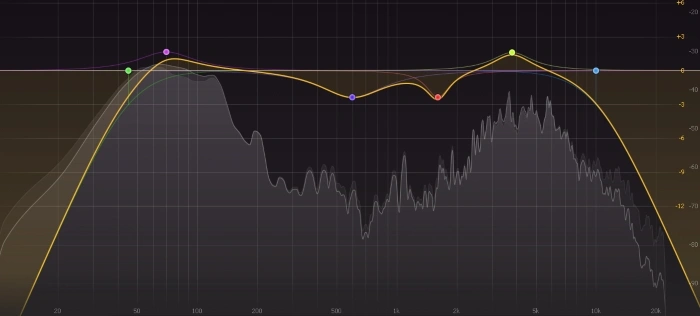
El click es gran parte de lo que permite que un bombo sobreviva en altavoces de portátil y auriculares, donde no hay graves que escuchar. Si lo quieres o no es cuestión de género, y algunos micrófonos apenas lo captan desde el principio.
Busca primero alrededor de 3 a 5 kHz, e intenta más arriba si ahí no hay nada que funcione. Unos pocos dB suelen bastar, y es fácil pasarse y que suene como una máquina de escribir, así que añádelo con la mezcla sonando.
6. Encuentra la Presencia
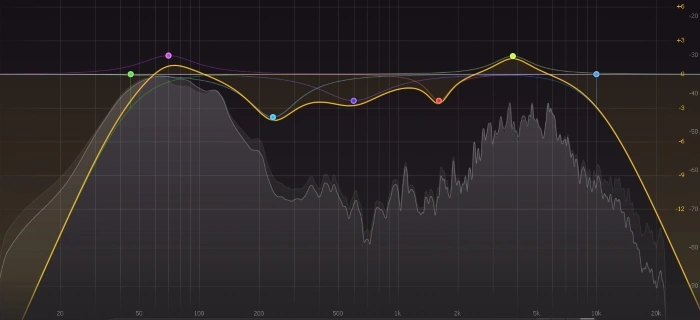
Un bombo puede tener peso y ataque y aun así sentirse detrás de la mezcla en lugar de dentro de ella. Dos soluciones fáciles son realzar los agudos o recortar los medios-graves que lo están apretando, y la segunda suele funcionar mejor porque hace espacio en lugar de añadir nivel. El nivel, el arreglo y la elección del tambor también influyen.
En el bombo de estas capturas quité unos 4 dB alrededor de 230 Hz y no realcé nada en absoluto. Eso es específico de este tambor y esta canción, que es el punto: el número no es la lección, la dirección sí.
¿Qué Tan Fuerte Debe Estar un Bombo?
Lo suficientemente fuerte como para anclar la canción y no más, lo cual es una relación más que un número. Ajústalo contra la caja y el bajo primero, luego compruébalo contra toda la mezcla.
Si quieres algo más concreto, balancea la batería como grupo antes de colocar el bombo dentro de ella, y deja suficiente headroom en el canal y el bus para que nada esté cerca de clipear. Una sola cifra de dB por sí sola no significa mucho sin saber de qué medidor vino y cómo se ve el resto de tu estructura de ganancia.
¿Dónde Debe Estar un Bombo en una Mezcla?
Normalmente centrado, y con una idea clara de qué parte de los graves es suya. En muchos bombos acústicos el cuerpo cae alrededor de 50 a 80 Hz, con el ataque mucho más arriba.
No hay ninguna ley que diga que el bombo tiene que estar debajo del bajo. Muchos discos de dance y hip-hop ponen el sub-bass debajo y dejan que el bombo golpee por encima. Lo que importa es que hayas decidido cuál está ahí abajo.
Conclusión
Filtra lo que el bombo no necesita, recorta lo que estorba, y luego decide cómo van a compartir los graves él y el bajo. Eso último es lo que hace o rompe un bajo-end, y es el paso que más recompensa escuchar la mezcla completa en lugar del tambor solo.
Descarga Gratuita: Póster con Tabla de Frecuencias EQ
El rango de frecuencias de cada instrumento en una tabla codificada por colores. Imprímela, pégala sobre tus monitores y deja de adivinar dónde cortar.

Lasha es guitarrista con más de 18 años de experiencia. Empezó en bandas locales, aprendió a grabar de forma autodidacta en 2010 y comenzó a grabar sus propias maquetas. Escribe sobre producción musical desde 2016, más recientemente en ApartmentRecording.com, donde trata técnicas de grabación y mezcla para guitarra, bajo y batería.